How AI Chatbots Boost Sales: A Complete Guide for Business Owners
Picture this: a potential customer visits your website at 11 PM, ready to buy. They have questions. They want answers. But your sales team is asleep, your phone lines are closed, and that prospect — a...
Introduction: The Sales Challenge Every Business Faces
Picture this: a potential customer visits your website at 11 PM, ready to buy. They have questions. They want answers. But your sales team is asleep, your phone lines are closed, and that prospect — along with their purchasing intent — quietly disappears. By morning, they've already signed up with a competitor.
This scenario plays out thousands of times every day for small and medium businesses. Studies suggest that 53% of customers are more likely to abandon a purchase if they can't get quick answers to their questions. In a world where attention spans are shrinking and competition is just one click away, response time isn't a courtesy — it's a competitive advantage.
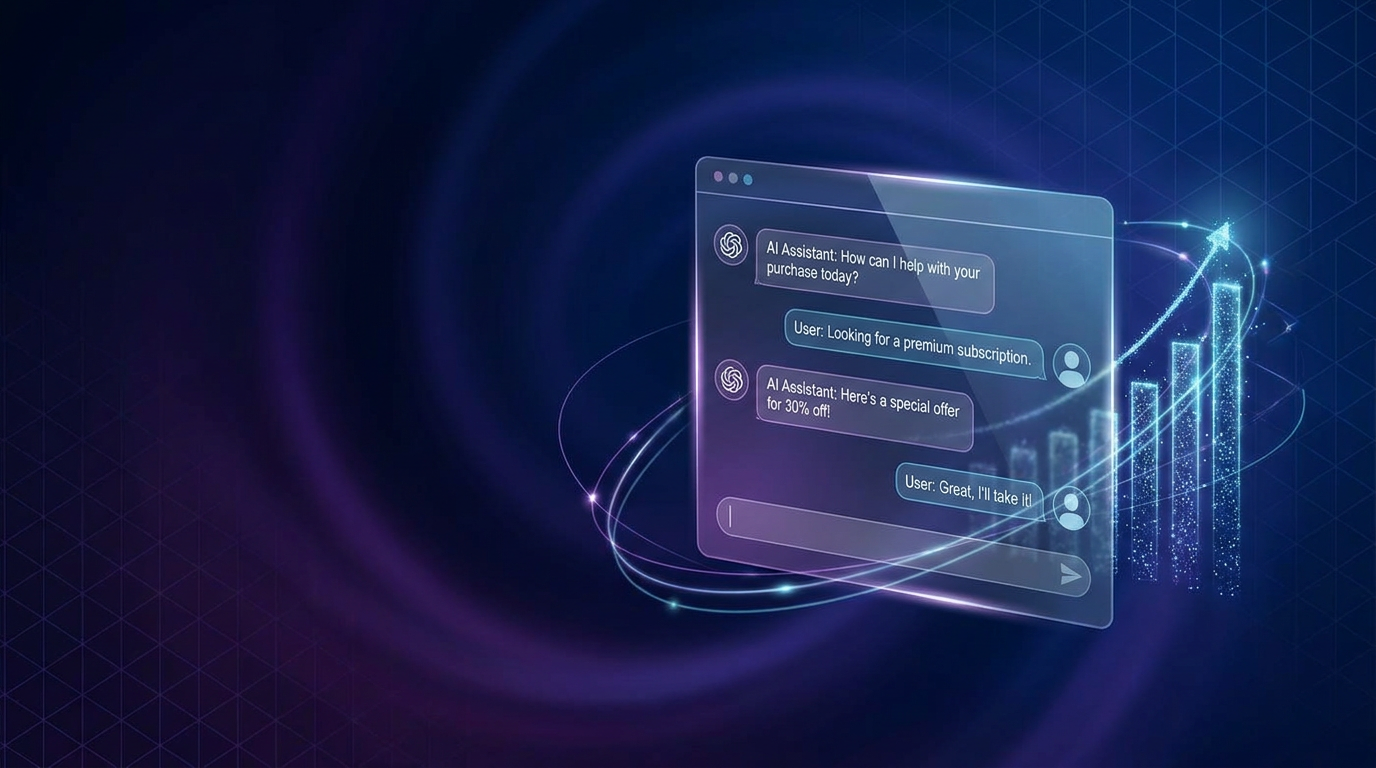
AI chatbots have emerged as one of the most practical, affordable solutions to this problem. But beyond simply answering questions, today's AI-powered chat tools are actively driving revenue. This guide breaks down exactly how — and how you can put them to work for your business.
What Makes AI Chatbots Different from Traditional Live Chat
Many business owners have tried live chat widgets before and walked away underwhelmed. The experience often looks like this: a chat bubble appears, a customer types a question, and then they wait — sometimes for minutes, sometimes forever — for a human agent to respond.
AI chatbots operate on a fundamentally different model. Instead of routing messages to a human who may or may not be available, they use natural language processing (NLP) to understand customer intent and respond intelligently in seconds.
Key Differences Worth Understanding
- Instant responses, always: AI chatbots respond in under 2 seconds, regardless of the time, day, or volume of incoming conversations.
- Simultaneous conversations: A single AI chatbot can handle hundreds of customer conversations at once — something no human team can replicate.
- Consistent messaging: Unlike human agents who may go off-script, AI chatbots deliver accurate, brand-aligned answers every single time.
- Continuous learning: Modern AI systems improve over time, getting better at understanding your customers the more they interact.
The result is a customer experience that feels responsive and helpful — without the overhead costs of a 24/7 staffed support team.
5 Ways AI Chatbots Directly Increase Revenue
Let's move beyond theory and look at the concrete mechanisms through which AI chatbots put more money in your business's pocket.
1. 24/7 Availability Captures After-Hours Sales
Research indicates that roughly 40% of online purchases happen outside of standard business hours. If your website goes silent at 5 PM, you're potentially leaving nearly half of your sales opportunities unattended. An AI chatbot never clocks out. It engages visitors at midnight just as effectively as it does at noon, answering product questions, processing inquiries, and guiding buyers toward a decision.
2. Intelligent Lead Qualification Saves Your Team Time
Not every website visitor is a buyer. AI chatbots can ask smart qualifying questions — budget, timeline, specific needs — and segment leads before they ever reach your sales team. This means your salespeople spend their time on warm, high-intent prospects rather than chasing dead ends. Businesses using automated lead qualification report up to 30% improvement in sales team productivity.
3. Personalized Recommendations Drive Larger Orders
Modern AI chatbots don't just answer questions — they analyze customer responses and browsing behavior to make tailored product or service recommendations. This kind of personalization, previously only possible with experienced sales staff, consistently increases average order values. In e-commerce settings, personalized product suggestions can boost revenue per visitor by 10–15%.
4. Reduced Cart Abandonment Through Timely Engagement
Cart abandonment rates hover around 70% across most industries. A well-timed chatbot message — "Need help completing your order?" or "Have a question about shipping?" — can recover a significant portion of those lost sales. Proactive engagement at key drop-off points transforms hesitation into conversion.
5. Faster Response Times Increase Conversion Rates
The data on response speed is clear: companies that respond to leads within the first minute see a 391% improvement in conversion rates compared to those that wait even five minutes. AI chatbots make sub-60-second response times effortless and scalable, giving your business a systematic edge in every sales interaction.
Real-World Results: What Businesses Are Seeing
The impact of AI chatbots isn't hypothetical — businesses across industries are reporting measurable gains.
- A mid-sized e-commerce retailer implemented an AI chatbot and saw a 25% increase in completed purchases within the first 90 days.
- A home services company used chatbot-driven lead qualification to reduce wasted sales calls by 40%, allowing their team to close more deals in less time.
- A B2B software provider reported that their AI chatbot generated 35% of all new demo bookings without any human intervention.
- Small retail businesses using AI chat have reported customer satisfaction scores improving by an average of 20 points, leading to stronger repeat purchase rates.
These results aren't reserved for enterprise companies with massive budgets. Today's AI chatbot platforms are specifically designed to be accessible and affordable for small and medium businesses.
How to Get Started Without Technical Knowledge
One of the biggest misconceptions about AI chatbots is that implementing one requires a development team or a deep technical background. Modern platforms have completely changed this reality.
A Simple 4-Step Process
- Step 1 – Define your goals: Decide what you want your chatbot to do first. Common starting points include answering FAQs, capturing leads, or guiding visitors to the right product page.
- Step 2 – Choose a platform: Select an AI chatbot solution that integrates with your existing website and tools. Look for intuitive setup, strong support, and customization options.
- Step 3 – Train your chatbot: Provide information about your products, services, pricing, and common customer questions. Good platforms make this as simple as filling out a form or uploading a document.
- Step 4 – Launch and refine: Go live and monitor performance. Review conversation logs to identify gaps, tweak responses, and continuously improve the experience over time.
Most businesses can have a functional AI chatbot up and running within a single day — no coding required.
The Bottom Line: Your Next Step Toward Smarter Sales
AI chatbots represent one of the highest-return investments available to small and medium business owners right now. They work around the clock, qualify your leads, personalize customer interactions, and reduce the friction that kills conversions — all without adding headcount or complexity to your operation.
The businesses gaining ground in competitive markets aren't necessarily spending more on ads or hiring bigger teams. They're working smarter by letting AI handle the repetitive, time-sensitive parts of the sales process so their human team can focus on what humans do best: building relationships and closing deals.
If you're ready to stop losing after-hours leads and start converting more of the traffic you're already getting, the next step is simpler than you think.
Try Lynx AI today and see how an intelligent chatbot can transform your sales process — no technical expertise required. Start your free trial and discover what your business looks like when it never stops selling.
Tags: